

What Is The Chemical Makeup Of The Atmosphere At Vemys
A hydrothermal vent is a fissure on the seafloor from which geothermally heated h2o discharges. They are commonly found near volcanically agile places, areas where tectonic plates are moving autonomously at spreading centers, ocean basins, and hotspots.[one] Hydrothermal deposits are rocks and mineral ore deposits formed by the activity of hydrothermal vents.
Hydrothermal vents exist because the earth is both geologically active and has large amounts of h2o on its surface and within its chaff. Under the sea, they may form features called black smokers or white smokers. Relative to the majority of the deep sea, the areas around hydrothermal vents are biologically more productive, often hosting complex communities fueled past the chemicals dissolved in the vent fluids. Chemosynthetic leaner and archaea form the base of the nutrient chain, supporting diverse organisms, including giant tube worms, clams, limpets and shrimp. Active hydrothermal vents are thought to exist on Jupiter's moon Europa and Saturn's moon Enceladus,[ii] [three] and it is speculated that ancient hydrothermal vents in one case existed on Mars.[1] [4]
Physical properties [edit]
Hydrothermal vents in the deep ocean typically form along the mid-ocean ridges, such equally the East Pacific Rising and the Mid-Atlantic Ridge. These are locations where two tectonic plates are diverging and new crust is being formed.
The h2o that issues from seafloor hydrothermal vents consists mostly of seawater drawn into the hydrothermal arrangement close to the volcanic edifice through faults and porous sediments or volcanic strata, plus some magmatic water released by the upwelling magma.[1] In terrestrial hydrothermal systems, the majority of h2o circulated within the fumarole and geyser systems is meteoric water plus ground water that has percolated down into the thermal system from the surface, but it also commonly contains some portion of metamorphic water, magmatic water, and sedimentary formational alkali that is released by the magma. The proportion of each varies from location to location.
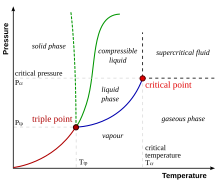
In dissimilarity to the approximately 2 °C (36 °F) ambience water temperature at these depths, water emerges from these vents at temperatures ranging from 60 °C (140 °F)[5] upwards to every bit high equally 464 °C (867 °F).[half-dozen] [seven] Due to the loftier hydrostatic pressure at these depths, h2o may exist in either its liquid class or as a supercritical fluid at such temperatures. The critical indicate of (pure) water is 375 °C (707 °F) at a pressure of 218 atmospheres.
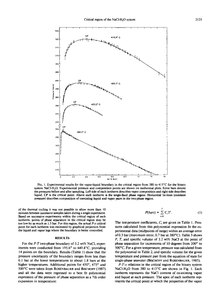
Experimental results for the vapor-liquid boundary in the critical region from 380 to 415 °C
Withal, introducing salinity into the fluid raises the critical indicate to higher temperatures and pressures. The critical betoken of seawater (3.2 wt. % NaCl) is 407 °C (765 °F) and 298.five bars,[8] corresponding to a depth of ~2,960 yard (9,710 ft) beneath sea level. Accordingly, if a hydrothermal fluid with a salinity of three.2 wt. % NaCl vents above 407 °C (765 °F) and 298.5 confined, it is supercritical. Furthermore, the salinity of vent fluids have been shown to vary widely due to phase separation in the crust.[9] The critical point for lower salinity fluids is at lower temperature and pressure weather than that for seawater, but college than that for pure h2o. For example, a vent fluid with a 2.24 wt. % NaCl salinity has the critical signal at 400 °C (752 °F) and 280.5 bars. Thus, water emerging from the hottest parts of some hydrothermal vents can be a supercritical fluid, possessing concrete properties between those of a gas and those of a liquid.[6] [7]
Examples of supercritical venting are institute at several sites. Sister Height (Inconsolable Cove Hydrothermal Field, iv°48′S 12°22′Westward / 4.800°Southward 12.367°W / -4.800; -12.367 , depth two,996 m or 9,829 ft) vents low salinity phase-separated, vapor-type fluids. Sustained venting was not found to exist supercritical simply a cursory injection of 464 °C (867 °F) was well above supercritical conditions. A nearby site, Turtle Pits, was establish to vent low salinity fluid at 407 °C (765 °F), which is above the critical indicate of the fluid at that salinity. A vent site in the Cayman Trough named Beebe, which is the world's deepest known hydrothermal site at ~5,000 m (16,000 ft) below sea level, has shown sustained supercritical venting at 401 °C (754 °F) and ii.3 wt% NaCl.[x]
Although supercritical conditions have been observed at several sites, it is not yet known what significance, if whatever, supercritical venting has in terms of hydrothermal apportionment, mineral eolith formation, geochemical fluxes or biological activity.
The initial stages of a vent chimney begin with the deposition of the mineral anhydrite. Sulfides of copper, iron, and zinc then precipitate in the chimney gaps, making it less porous over the course of fourth dimension. Vent growths on the order of 30 cm (1 ft) per day have been recorded.[eleven] An Apr 2007 exploration of the deep-sea vents off the coast of Fiji found those vents to exist a significant source of dissolved iron (see fe cycle).[12]
Black smokers and white smokers [edit]

Audio recording from a black smoker
Some hydrothermal vents form roughly cylindrical chimney structures. These form from minerals that are dissolved in the vent fluid. When the superheated water contacts the about-freezing sea water, the minerals precipitate out to form particles which add to the acme of the stacks. Some of these chimney structures can achieve heights of lx g.[thirteen] An example of such a towering vent was "Godzilla", a construction on the Pacific Ocean deep seafloor nearly Oregon that rose to 40 chiliad before information technology cruel over in 1996.[fourteen]

Black smokers were start discovered in 1979 on the East Pacific Rise at 21° north latitude
A blackness smoker or deep body of water vent is a blazon of hydrothermal vent found on the seabed, typically in the bathyal zone (with largest frequency in depths from 2500 m to 3000 m), but likewise in bottom depths equally well as deeper in the abyssal zone.[1] They announced as black, chimney-like structures that emit a cloud of black fabric. Black smokers typically emit particles with loftier levels of sulfur-begetting minerals, or sulfides. Black smokers are formed in fields hundreds of meters broad when superheated water from beneath Earth'southward crust comes through the ocean flooring (h2o may attain temperatures above 400 °C).[1] This water is rich in dissolved minerals from the chaff, most notably sulfides. When it comes in contact with common cold body of water water, many minerals precipitate, forming a blackness, chimney-like structure effectually each vent. The deposited metallic sulfides can go massive sulfide ore deposits in fourth dimension. Some black smokers on the Azores portion of the Mid Atlantic Ridge are extremely rich in metal content, such as Rainbow with 24,000 μM concentrations of iron.[15]
Black smokers were first discovered in 1979 on the Eastward Pacific Rise by scientists from Scripps Institution of Oceanography during the Ascent Projection.[16] They were observed using the deep submergence vehicle ALVIN from the Woods Hole Oceanographic Institution. At present, black smokers are known to exist in the Atlantic and Pacific Oceans, at an average depth of 2100 metres. The most northerly black smokers are a cluster of five named Loki'due south Castle,[17] discovered in 2008 by scientists from the University of Bergen at 73°Northward, on the Mid-Atlantic Ridge between Greenland and Norway. These black smokers are of interest as they are in a more stable expanse of the Earth's crust, where tectonic forces are less and consequently fields of hydrothermal vents are less common.[18] The world'south deepest known blackness smokers are located in the Cayman Trough, 5,000 m (3.ane miles) below the ocean'due south surface.[19]
White smoker vents emit lighter-hued minerals, such as those containing barium, calcium and silicon. These vents also tend to have lower-temperature plumes probably because they are by and large distant from their heat source.[i]
Black and white smokers may coexist in the same hydrothermal field, just they generally represent proximal (close) and distal (afar) vents to the main upflow zone, respectively. However, white smokers stand for mostly to waning stages of such hydrothermal fields, as magmatic rut sources become progressively more than distant from the source (due to magma crystallization) and hydrothermal fluids become dominated by seawater instead of magmatic water. Mineralizing fluids from this type of vent are rich in calcium and they class dominantly sulfate-rich (i.due east., barite and anhydrite) and carbonate deposits.[1]
Biology of hydrothermal vents [edit]
Life has traditionally been seen as driven by free energy from the sun, merely abyssal organisms have no access to sunlight, so biological communities around hydrothermal vents must depend on nutrients found in the dusty chemic deposits and hydrothermal fluids in which they live. Previously, Benthic oceanographers assumed that vent organisms were dependent on marine snow, as deep-bounding main organisms are. This would get out them dependent on plant life and thus the sun. Some hydrothermal vent organisms do consume this "rain", but with only such a system, life forms would exist sparse. Compared to the surrounding body of water flooring, however, hydrothermal vent zones have a density of organisms x,000 to 100,000 times greater.
The hydrothermal vents are recognized every bit a blazon of chemosynthetic based ecosystems (CBE) where master productivity is fuelled past chemical compounds as energy sources instead of low-cal (chemoautotrophy).[20] Hydrothermal vent communities are able to sustain such vast amounts of life because vent organisms depend on chemosynthetic bacteria for food. The water from the hydrothermal vent is rich in dissolved minerals and supports a large population of chemoautotrophic leaner. These bacteria use sulfur compounds, particularly hydrogen sulfide, a chemical highly toxic to most known organisms, to produce organic material through the procedure of chemosynthesis.
Biological communities [edit]
The ecosystem and then formed is reliant upon the connected existence of the hydrothermal vent field as the master source of free energy, which differs from most surface life on Earth, which is based on solar energy. However, although it is often said that these communities exist independently of the sunday, some of the organisms are actually dependent upon oxygen produced past photosynthetic organisms, while others are anaerobic.

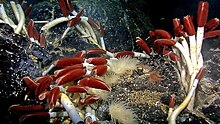
The chemosynthetic leaner abound into a thick mat which attracts other organisms, such as amphipods and copepods, which graze upon the leaner direct. Larger organisms, such as snails, shrimp, venereal, tube worms, fish (especially eelpout, cutthroat eel, ophidiiforms and Symphurus thermophilus), and octopuses (notably Vulcanoctopus hydrothermalis), form a nutrient concatenation of predator and prey relationships above the primary consumers. The main families of organisms plant around seafloor vents are annelids, pogonophorans, gastropods, and crustaceans, with large bivalves, vestimentiferan worms, and "eyeless" shrimp making up the bulk of nonmicrobial organisms.
Siboglinid tube worms, which may grow to over two thou (6.6 ft) alpine in the largest species, oft form an important part of the community effectually a hydrothermal vent. They have no mouth or digestive tract, and like parasitic worms, absorb nutrients produced by the bacteria in their tissues. About 285 billion bacteria are constitute per ounce of tubeworm tissue. Tubeworms have red plumes which contain hemoglobin. Hemoglobin combines with hydrogen sulfide and transfers it to the bacteria living inside the worm. In return, the bacteria attend the worm with carbon compounds. Two of the species that inhabit a hydrothermal vent are Tevnia jerichonana, and Riftia pachyptila. One discovered community, dubbed "Eel Metropolis", consists predominantly of the eel Dysommina rugosa. Though eels are non uncommon, invertebrates typically dominate hydrothermal vents. Eel City is located about Nafanua volcanic cone, American Samoa.[21]
In 1993, already more than 100 gastropod species were known to occur in hydrothermal vents.[22] Over 300 new species have been discovered at hydrothermal vents,[23] many of them "sister species" to others found in geographically separated vent areas. It has been proposed that earlier the North American plate overrode the mid-ocean ridge, there was a single biogeographic vent region found in the eastern Pacific.[24] The subsequent bulwark to travel began the evolutionary departure of species in different locations. The examples of convergent evolution seen between singled-out hydrothermal vents is seen as major support for the theory of natural selection and of evolution equally a whole.
Although life is very thin at these depths, black smokers are the centers of unabridged ecosystems. Sunlight is nonexistent, so many organisms, such as archaea and extremophiles, convert the oestrus, methane, and sulfur compounds provided by black smokers into energy through a procedure called chemosynthesis. More than complex life forms, such as clams and tubeworms, feed on these organisms. The organisms at the base of the food chain also deposit minerals into the base of the blackness smoker, therefore completing the life cycle.
A species of phototrophic bacterium has been found living near a black smoker off the declension of Mexico at a depth of 2,500 m (8,200 ft). No sunlight penetrates that far into the waters. Instead, the bacteria, part of the Chlorobiaceae family, utilise the faint glow from the black smoker for photosynthesis. This is the first organism discovered in nature to exclusively use a light other than sunlight for photosynthesis.[25]
New and unusual species are constantly being discovered in the neighborhood of black smokers. The Pompeii worm Alvinella pompejana, which is capable of withstanding temperatures upwards to 80 °C (176 °F), was found in the 1980s, and a scaly-foot gastropod Chrysomallon squamiferum in 2001 during an expedition to the Indian Bounding main'southward Kairei hydrothermal vent field. The latter uses iron sulfides (pyrite and greigite) for the structure of its dermal sclerites (hardened body parts), instead of calcium carbonate. The farthermost pressure of 2500 thousand of water (approximately 25 megapascals or 250 atmospheres) is thought to play a role in stabilizing atomic number 26 sulfide for biological purposes. This armor plating probably serves equally a defense against the venomous radula (teeth) of predatory snails in that community.
In March 2017, researchers reported bear witness of mayhap the oldest forms of life on Earth. Putative fossilized microorganisms were discovered in hydrothermal vent precipitates in the Nuvvuagittuq Belt of Quebec, Canada, that may have lived every bit early every bit iv.280 billion years agone, not long later the oceans formed four.4 billion years ago, and non long later the formation of the Globe four.54 billion years agone.[26] [27] [28]
Animal-bacterial symbiosis [edit]
Hydrothermal vent ecosystems have enormous biomass and productivity, only this rests on the symbiotic relationships that take evolved at vents. Abyssal hydrothermal vent ecosystems differ from their shallow-water and terrestrial hydrothermal counterparts due to the symbiosis that occurs betwixt macroinvertebrate hosts and chemoautotrophic microbial symbionts in the former.[29] Since sunlight does not achieve deep-sea hydrothermal vents, organisms in abyssal hydrothermal vents cannot obtain free energy from the sun to perform photosynthesis. Instead, the microbial life found at hydrothermal vents is chemosynthetic; they gear up carbon by using energy from chemicals such equally sulfide, as opposed to light energy from the sun. In other words, the symbiont converts inorganic molecules (H2Due south, CO2, O) to organic molecules that the host then uses as nutrition. However, sulfide is an extremely toxic substance to most life on World. For this reason, scientists were astounded when they showtime establish hydrothermal vents teeming with life in 1977. What was discovered was the ubiquitous symbiosis of chemoautotrophs living in (endosymbiosis) the vent animals' gills; the reason why multicellular life is capable to survive the toxicity of vent systems. Scientists are therefore at present studying how the microbial symbionts aid in sulfide detoxification (therefore allowing the host to survive the otherwise toxic conditions). Work on microbiome function shows that host-associated microbiomes are also of import in host development, nutrition, defense against predators, and detoxification. In return, the host provides the symbiont with chemicals required for chemosynthesis, such as carbon, sulfide, and oxygen.[ commendation needed ]
In the early stages of studying life at hydrothermal vents, there were differing theories regarding the mechanisms by which multicellular organisms were able to acquire nutrients from these environments, and how they were able to survive in such extreme weather. In 1977, it was hypothesized that the chemoautotrophic bacteria at hydrothermal vents might be responsible for contributing to the nutrition of suspension-feeding bivalves.[30]
Finally, in 1981, it was understood that behemothic tubeworm nutrition acquisition occurred equally a outcome of chemoautotrophic bacterial endosymbionts.[31] [32] [33] As scientists connected to report life at hydrothermal vents, it was understood that symbiotic relationships between chemoautotrophs and macrofauna invertebrate species was ubiquitous. For case, in 1983, mollusk gill tissue was confirmed to comprise bacterial endosymbionts;[34] in 1984 vent bathymodiolid mussels and vesicomyid clams were as well found to deport endosymbionts.[35] [36]
However, the mechanisms past which organisms acquire their symbionts differ, equally do the metabolic relationships. For instance, tubeworms take no mouth and no gut, but they do have a "trophosome", which is where they bargain with diet and where their endosymbionts are institute. They also take a bright ruby plumage, which they use to uptake compounds such as O, HiiSouth, and CO2, which feed the endosymbionts in their trophosome. Remarkably, the tubeworms hemoglobin (which incidentally is the reason for the bright red color of the plume) is capable of carrying oxygen without interference or inhibition from sulfide, despite the fact that oxygen and sulfide are typically very reactive. In 2005, it was discovered that this is possible due to zinc ions that bind the hydrogen sulfide in the tubeworms hemoglobin, therefore preventing the sulfide from reacting with the oxygen. It also reduces the tubeworms tissue from exposure to the sulfide and provides the bacteria with the sulfide to perform chemoautotrophy.[37] It has also been discovered that tubeworms can metabolize CO2 in two different means, and tin can alternate between the ii as needed equally environmental weather change.[38]
In 1988, enquiry confirmed thiotrophic (sulfide-oxidizing) leaner in Alvinochonca hessleri, a large vent mollusk.[39] In order to circumvent the toxicity of sulfide, mussels starting time catechumen information technology to thiosulfate earlier carrying information technology over to the symbionts.[40] In the case of motile organisms such every bit alvinocarid shrimp, they must track oxic (oxygen-rich) / anoxic (oxygen-poor) environments equally they fluctuate in the surroundings.[ commendation needed ]
Organisms living at the edge of hydrothermal vent fields, such every bit pectinid scallops, also carry endosymbionts in their gills, and as a outcome their bacterial density is low relative to organisms living nearer to the vent. Nevertheless, the scallop'southward dependence on the microbial endosymbiont for obtaining their nutrition is therefore as well lessened.[ commendation needed ]
Furthermore, not all host animals have endosymbionts; some have episymbionts—symbionts living on the brute every bit opposed to inside the fauna. Shrimp establish at vents in the Mid-Atlantic Ridge were in one case idea of as an exception to the necessity of symbiosis for macroinvertebrate survival at vents. That changed in 1988 when they were discovered to behave episymbionts.[41] Since then, other organisms at vents take been establish to conduct episymbionts also,[42] such as Lepetodrilis fucensis.[43]
Furthermore, while some symbionts reduce sulfur compounds, others are known as "methanotrophs" and reduce carbon compounds, namely methane. Bathmodiolid mussels are an example of a host that contains methanotrophic endosymbionts; nevertheless, the latter more often than not occur in cold seeps as opposed to hydrothermal vents.[ citation needed ]
While chemosynthesis occurring at the deep bounding main allows organisms to live without sunlight in the firsthand sense, they technically still rely on the sun for survival, since oxygen in the bounding main is a byproduct of photosynthesis. Yet, if the sun were to suddenly disappear and photosynthesis ceased to occur on our planet, life at the deep-sea hydrothermal vents could continue for millennia (until the oxygen was depleted).[ commendation needed ]
Theory of hydrothermal origin of life [edit]
The chemic and thermal dynamics in hydrothermal vents makes such environments highly suitable thermodynamically for chemical evolution processes to accept place. Therefore, thermal free energy flux is a permanent agent and is hypothesized to take contributed to the evolution of the planet, including prebiotic chemistry.[1]
Günter Wächtershäuser proposed the atomic number 26-sulfur world theory and suggested that life might have originated at hydrothermal vents. Wächtershäuser proposed that an early on course of metabolism predated genetics. By metabolism he meant a cycle of chemical reactions that release energy in a form that can exist harnessed past other processes.[44]
It has been proposed that amino acid synthesis could have occurred deep in the Earth'southward crust and that these amino acids were subsequently shot up along with hydrothermal fluids into cooler waters, where lower temperatures and the presence of dirt minerals would have fostered the formation of peptides and protocells.[45] This is an attractive hypothesis because of the abundance of CH4 (methane) and NH3 (ammonia) present in hydrothermal vent regions, a condition that was not provided by the World'due south primitive atmosphere. A major limitation to this hypothesis is the lack of stability of organic molecules at high temperatures, just some take suggested that life would accept originated exterior of the zones of highest temperature.[46] There are numerous species of extremophiles and other organisms currently living immediately around deep-body of water vents, suggesting that this is indeed a possible scenario.
Experimental research and computer modeling signal that the surfaces of mineral particles inside hydrothermal vents have similar catalytic properties to enzymes and are able to create elementary organic molecules, such every bit methanol (CH3OH) and formic acid (HCOiiH), out of the dissolved CO2 in the water.[47] [48] [49]
It is thought that alkaline hydrothermal vents (white smokers) might be more suitable for emerging life than black smokers due to their pH conditions.[l] [51]
The Deep Hot Biosphere [edit]
At the beginning of his 1992 paper The Deep Hot Biosphere, Thomas Golden referred to ocean vents in support of his theory that the lower levels of the globe are rich in living biological fabric that finds its style to the surface.[52] He further expanded his ideas in the book The Deep Hot Biosphere.[53]
An article on abiogenic hydrocarbon production in the Feb 2008 issue of Science journal used data from experiments at the Lost City hydrothermal field to report how the abiotic synthesis of low molecular mass hydrocarbons from mantle derived carbon dioxide may occur in the presence of ultramafic rocks, water, and moderate amounts of heat.[54]
Discovery and exploration [edit]

In 1949, a deep water survey reported anomalously hot brines in the cardinal portion of the Cherry-red Sea. Later on piece of work in the 1960s confirmed the presence of hot, threescore °C (140 °F), saline brines and associated metalliferous muds. The hot solutions were emanating from an active subseafloor rift. The highly saline character of the waters was non hospitable to living organisms.[56] The brines and associated muds are currently under investigation as a source of mineable precious and base metals.
In June 1976, scientists from the Scripps Institution of Oceanography obtained the get-go show for submarine hydrothermal vents forth the Galápagos Rift, a spur of the East Pacific Rise, on the Pleiades Ii expedition, using the Deep-Tow seafloor imaging system.[57] In 1977, the first scientific papers on hydrothermal vents were published[58] by scientists from the Scripps Institution of Oceanography; enquiry scientist Peter Lonsdale published photographs taken from deep-towed cameras,[59] and PhD student Kathleen Crane published maps and temperature anomaly data.[60] Transponders were deployed at the site, which was nicknamed "Clam-bake", to enable an expedition to return the following twelvemonth for direct observations with the DSV Alvin.
Chemosynthetic ecosystems surrounding the Galápagos Rift submarine hydrothermal vents were outset directly observed in 1977, when a group of marine geologists funded by the National Science Foundation returned to the Clambake sites. The master investigator for the submersible written report was Jack Corliss of Oregon State University. Corliss and Tjeerd van Andel from Stanford University observed and sampled the vents and their ecosystem on Feb 17, 1977, while diving in the DSV Alvin, a inquiry submersible operated by the Woods Pigsty Oceanographic Institution (WHOI).[61] Other scientists on the enquiry cruise included Richard (Dick) Von Herzen and Robert Ballard of WHOI, Jack Dymond and Louis Gordon of Oregon State Academy, John Edmond and Tanya Atwater of the Massachusetts Institute of Technology, Dave Williams of the U.Southward. Geological Survey, and Kathleen Crane of Scripps Institution of Oceanography.[61] [62] This team published their observations of the vents, organisms, and the limerick of the vent fluids in the journal Science.[63] In 1979, a team of biologists led by J. Frederick Grassle, at the time at WHOI, returned to the same location to investigate the biological communities discovered two year earlier.
High temperature hydrothermal vents, the "black smokers", were discovered in spring 1979 past a squad from the Scripps Institution of Oceanography using the submersible Alvin. The Ascent expedition explored the East Pacific Rise at 21° N with the goals of testing geophysical mapping of the bounding main floor with the Alvin and finding another hydrothermal field beyond the Galápagos Rift vents. The trek was led by Fred Spiess and Ken Macdonald and included participants from the U.S., Mexico and France.[sixteen] The dive region was selected based on the discovery of sea floor mounds of sulfide minerals by the French CYAMEX expedition in 1978.[64] Prior to dive operations, trek member Robert Ballard located virtually-bottom water temperature anomalies using a deeply towed musical instrument bundle. The first swoop was targeted at one of those anomalies. On Easter Sunday April 15, 1979 during a dive of Alvin to 2600 meters, Roger Larson and Bruce Luyendyk institute a hydrothermal vent field with a biological community like to the Galápagos vents. On a subsequent dive on April 21, William Normark and Thierry Juteau discovered the loftier temperature vents emitting black mineral particle jets from chimneys; the blackness smokers.[65] Following this Macdonald and Jim Aiken rigged a temperature probe to Alvin to measure the water temperature at the black smoker vents. This observed the highest temperatures then recorded at deep sea hydrothermal vents (380±thirty °C).[66] Analysis of black smoker material and the chimneys that fed them revealed that fe sulfide precipitates are the common minerals in the "smoke" and walls of the chimneys.[67]
In 2005, Neptune Resources NL, a mineral exploration company, applied for and was granted 35,000 km2 of exploration rights over the Kermadec Arc in New Zealand'due south Sectional Economic Zone to explore for seafloor massive sulfide deposits, a potential new source of lead-zinc-copper sulfides formed from modernistic hydrothermal vent fields. The discovery of a vent in the Pacific Sea offshore of Costa Rica, named the Medusa hydrothermal vent field (after the ophidian-haired Medusa of Greek mythology), was announced in Apr 2007.[68] The Ashadze hydrothermal field (xiii°N on the Mid-Atlantic Ridge, elevation -4200 m) was the deepest known loftier-temperature hydrothermal field until 2010, when a hydrothermal plume emanating from the Beebe[69] site ( eighteen°33′N 81°43′W / 18.550°Due north 81.717°W / 18.550; -81.717 , elevation -5000 thou) was detected by a group of scientists from NASA Jet Propulsion Laboratory and Woods Hole Oceanographic Institution. This site is located on the 110 km long, ultraslow spreading Mid-Cayman Rise within the Cayman Trough.[70] In early 2013, the deepest known hydrothermal vents were discovered in the Caribbean Sea at a depth of near 5,000 metres (16,000 ft).[71]
Oceanographers are studying the volcanoes and hydrothermal vents of the Juan de Fuca mid body of water ridge where tectonic plates are moving away from each other.[72]
Hydrothermal vents and other geothermal manifestations are currently being explored in the Bahía de Concepción, Baja California Sur, Mexico.[73]
Distribution [edit]
Hydrothermal vents are distributed forth the Earth'south plate boundaries, although they may also be found at intra-plate locations such equally hotspot volcanoes. As of 2009 there were approximately 500 known active submarine hydrothermal vent fields, with near one-half visually observed at the seafloor and the other half suspected from water column indicators and/or seafloor deposits.[74] The InterRidge program office hosts a global database for the locations of known active submarine hydrothermal vent fields.

Rogers et al. (2012)[75] recognized at least 11 biogeographic provinces of hydrothermal vent systems:
- Mid-Atlantic Ridge province,
- East Scotia Ridge province,
- northern East Pacific Ascension province,
- key East Pacific Ascent province,
- southern E Pacific Rise province,
- southward of the Easter Microplate,
- Indian Bounding main province,
- 4 provinces in the western Pacific and lots more.
Exploitation [edit]
Hydrothermal vents, in some instances, take led to the germination of exploitable mineral resources via degradation of seafloor massive sulfide deposits. The Mount Isa orebody located in Queensland, Australia, is an excellent case.[76] Many hydrothermal vents are rich in cobalt, aureate, copper, and rare earth metals essential for electronic components.[77] Hydrothermal venting on the Archean seafloor is considered to take formed Algoma-type banded iron formations which have been a source of iron ore.[78]
Recently, mineral exploration companies, driven by the elevated price activity in the base of operations metals sector during the mid-2000s, take turned their attention to extraction of mineral resource from hydrothermal fields on the seafloor. Significant cost reductions are, in theory, possible.[79]
In countries such as Japan where mineral resources are primarily derived from international imports,[80] there is a item push for the extraction of seafloor mineral resources.[81] The earth's first "large-scale" mining of hydrothermal vent mineral deposits was carried out by Nippon Oil, Gas and Metals National Corporation (JOGMEC) in August - September, 2017. JOGMEC carried out this operation using the Research Vessel Hakurei. This mining was carried out at the 'Izena hole/cauldron' vent field within the hydrothermally active back-arc bowl known as the Okinawa Trough which contains 15 confirmed vent fields according to the InterRidge Vents Database.
Two companies are currently engaged in the late stages of commencing to mine seafloor massive sulfides (SMS). Nautilus Minerals is in the advanced stages of commencing extraction from its Solwarra deposit, in the Bismarck Archipelago, and Neptune Minerals is at an earlier stage with its Rumble Two W deposit, located on the Kermadec Arc, nearly the Kermadec Islands. Both companies are proposing using modified existing engineering. Nautilus Minerals, in partnership with Placer Dome (now part of Barrick Golden), succeeded in 2006 in returning over 10 metric tons of mined SMS to the surface using modified drum cutters mounted on an ROV, a world kickoff.[82] Neptune Minerals in 2007 succeeded in recovering SMS sediment samples using a modified oil industry suction pump mounted on an ROV, also a earth outset.[83]
Potential seafloor mining has ecology impacts including dust plumes from mining machinery affecting filter-feeding organisms,[77] collapsing or reopening vents, methane clathrate release, or fifty-fifty sub-oceanic country slides.[84] A large amount of work is currently being engaged in by both the above-mentioned companies to ensure that potential environmental impacts of seafloor mining are well understood and control measures are implemented, before exploitation commences.[85] Nevertheless, this process has been arguably hindered by the disproportionate distribution of research effort among vent ecosystems: the best studied and understood hydrothermal vent ecosystems are not representative of those targeted for mining.[86]
Attempts have been made in the past to exploit minerals from the seafloor. The 1960s and 70s saw a great deal of activity (and expenditure) in the recovery of manganese nodules from the abyssal plains, with varying degrees of success. This does demonstrate withal that recovery of minerals from the seafloor is possible, and has been possible for some fourth dimension. Mining of manganese nodules served every bit a cover story for the elaborate effort in 1974 by the CIA to raise the sunken Soviet submarine K-129, using the Glomar Explorer, a ship purpose congenital for the task past Howard Hughes.[87] The performance was known as Project Azorian, and the cover story of seafloor mining of manganese nodules may have served as the impetus to propel other companies to brand the endeavour.
Conservation [edit]
The conservation of hydrothermal vents has been the discipline of sometimes heated give-and-take in the oceanographic community for the last xx years.[88] It has been pointed out that it may be that those causing the most damage to these fairly rare habitats are scientists.[89] [ninety] At that place take been attempts to forge agreements over the behaviour of scientists investigating vent sites but although in that location is an agreed lawmaking of do there is every bit yet no formal international and legally binding agreement.[91]
Run across also [edit]
- Brine pool – Large surface area of brine on the ocean basin
- Attempt Hydrothermal Vents – Group of hydrothermal vents in the northward-eastern Pacific Ocean southwest of Vancouver Isle, British Columbia, Canada
- Magic Mount (British Columbia) – Hydrothermal vent field on the Southern Explorer Ridge, west of Vancouver Isle, British Columbia
- 9° Northward – Region of hydrothermal vents on the Eastward Pacific Rise in the Pacific Bounding main
- Lost City Hydrothermal Field
- Abiogenesis – Natural process by which life arises from not-living matter
- Pito Seamount – Seamount in the Pacific Ocean northward-northwest of Easter Island
- Submarine volcano – Underwater vents or fissures in the Earth's surface from which magma can erupt
- Volcanogenic massive sulfide ore deposit, also known as VMS deposit – Metallic deposit in Volcanic Irruption
- Extremophile – Organisms capable of living in extreme environments
References [edit]
- ^ a b c d due east f g h Colín-García, María (2016). "Hydrothermal vents and prebiotic chemistry: a review". Boletín de la Sociedad Geológica Mexicana. 68 (3): 599–620. doi:ten.18268/BSGM2016v68n3a13.
- ^ Chang, Kenneth (13 Apr 2017). "Conditions for Life Detected on Saturn Moon Enceladus". New York Times . Retrieved xiv Apr 2017.
- ^ "Spacecraft Data Suggest Saturn Moon'south Bounding main May Harbor Hydrothermal Activity". NASA. xi March 2015. Retrieved 12 March 2015.
- ^ Paine, M. (15 May 2001). "Mars Explorers to Do good from Australian Research". Infinite.com. Archived from the original on 21 February 2006.
- ^
- ^ a b Haase, Thousand. M.; et al. (2007). "Young volcanism and related hydrothermal activity at five°S on the slow-spreading southern Mid-Atlantic Ridge". Geochemistry, Geophysics, Geosystems. 8 (11): Q11002. Bibcode:2007GGG.....811002H. doi:10.1029/2006GC001509.
- ^ a b Haase, Thou. M.; et al. (2009). "Fluid compositions and mineralogy of precipitates from Mid Atlantic Ridge hydrothermal vents at iv°48'S". Pangaea. doi:x.1594/PANGAEA.727454.
- ^ Bischoff, James Fifty; Rosenbauer, Robert J (1988). "Liquid-vapor relations in the critical region of the system NaCl-H2O from 380 to 415°C: A refined determination of the disquisitional signal and two-phase boundary of seawater". Geochimica et Cosmochimica Acta (Submitted manuscript). 52 (eight): 2121–2126. Bibcode:1988GeCoA..52.2121B. doi:10.1016/0016-7037(88)90192-5.
- ^ Von Damm, K L (1990). "Seafloor Hydrothermal Activity: Black Smoker Chemistry and Chimneys". Annual Review of Globe and Planetary Sciences (Submitted manuscript). 18 (1): 173–204. Bibcode:1990AREPS..18..173V. doi:10.1146/annurev.ea.18.050190.001133.
- ^ Webber, A.P.; Murton, B.; Roberts, S.; Hodgkinson, M. "Supercritical Venting and VMS Formation at the Beebe Hydrothermal Field, Cayman Spreading Centre". Goldschmidt Conference Abstracts 2014. Geochemical Society. Archived from the original on 29 July 2014. Retrieved 29 July 2014.
- ^ Tivey, M. K. (1 December 1998). "How to Build a Black Smoker Chimney: The Formation of Mineral Deposits At Mid-Ocean Ridges". Woods Hole Oceanographic Institution. Retrieved 2006-07-07 .
- ^ Petkewich, Rachel (September 2008). "Tracking ocean iron". Chemical & Engineering science News. 86 (35): 62–63. doi:x.1021/cen-v086n035.p062.
- ^ Perkins, Due south. (2001). "New blazon of hydrothermal vent looms large". Scientific discipline News. 160 (2): 21. doi:10.2307/4012715. JSTOR 4012715.
- ^ Kelley, Deborah S. "Black Smokers: Incubators on the Seafloor" (PDF). p. ii.
- ^ Douville, E; Charlou, J.Fifty; Oelkers, E.H; Bienvenu, P; Jove Colon, C.F; Donval, J.P; Fouquet, Y; Prieur, D; Appriou, P (March 2002). "The rainbow vent fluids (36°14′N, MAR): the influence of ultramafic rocks and phase separation on trace metallic content in Mid-Atlantic Ridge hydrothermal fluids". Chemic Geology. 184 (ane–ii): 37–48. Bibcode:2002ChGeo.184...37D. doi:10.1016/S0009-2541(01)00351-v.
- ^ a b Spiess, F. N.; Macdonald, K. C.; Atwater, T.; Ballard, R.; Carranza, A.; Cordoba, D.; Cox, C.; Garcia, V. Grand. D.; Francheteau, J.; Guerrero, J.; Hawkins, J.; Haymon, R.; Hessler, R.; Juteau, T.; Kastner, Thousand.; Larson, R.; Luyendyk, B.; Macdougall, J. D.; Miller, Southward.; Normark, Westward.; Orcutt, J.; Rangin, C. (28 March 1980). "East Pacific Ascension: Hot Springs and Geophysical Experiments". Scientific discipline. 207 (4438): 1421–1433. Bibcode:1980Sci...207.1421S. doi:10.1126/science.207.4438.1421. PMID 17779602. S2CID 28363398.
- ^ "Boiling Hot H2o Found in Frigid Chill Sea". LiveScience. 24 July 2008. Retrieved 2008-07-25 .
- ^ "Scientists Break Record By Finding Northernmost Hydrothermal Vent Field". Science Daily. 24 July 2008. Retrieved 2008-07-25 .
- ^ Cross, A. (12 April 2010). "World'due south deepest undersea vents discovered in Caribbean". BBC News . Retrieved 2010-04-13 .
- ^ Ramirez-Llodra, Eastward; Keith, DA (2020). "M3.seven Chemosynthetic-based-ecosystems (CBE)". In Keith, D.A.; Ferrer-Paris, J.R.; Nicholson, Due east.; Kingsford, R.T. (eds.). The IUCN Global Ecosystem Typology 2.0: Descriptive profiles for biomes and ecosystem functional groups. Gland, Switzerland: IUCN. doi:10.2305/IUCN.CH.2020.13.en. ISBN978-2-8317-2077-vii. S2CID 241360441.
- ^ "Extremes of Eel City". Astrobiology Mag. 28 May 2008. Retrieved 2007-08-30 .
- ^ Sysoev, A. Five.; Kantor, Yu. I. (1995). "Two new species of Phymorhynchus (Gastropoda, Conoidea, Conidae) from the hydrothermal vents" (PDF). Ruthenica. v: 17–26.
- ^ Botos, S. "Life on a hydrothermal vent". Hydrothermal Vent Communities.
- ^ Van Dover, C. Fifty. "Hot Topics: Biogeography of deep-sea hydrothermal vent faunas". Woods Hole Oceanographic Institution.
- ^ Beatty, J.T.; et al. (2005). "An obligately photosynthetic bacterial anaerobe from a deep-sea hydrothermal vent". Proceedings of the National Academy of Sciences. 102 (26): 9306–10. Bibcode:2005PNAS..102.9306B. doi:10.1073/pnas.0503674102. PMC1166624. PMID 15967984.
- ^ Dodd, Matthew S.; Papineau, Dominic; Grenne, Tor; Slack, John F.; Rittner, Martin; Pirajno, Franco; O'Neil, Jonathan; Footling, Crispin T. S. (2 March 2017). "Testify for early life in Earth's oldest hydrothermal vent precipitates" (PDF). Nature. 543 (7643): 60–64. Bibcode:2017Natur.543...60D. doi:10.1038/nature21377. PMID 28252057. S2CID 2420384.
- ^ Zimmer, Carl (ane March 2017). "Scientists Say Canadian Bacteria Fossils May Be World's Oldest". The New York Times . Retrieved 2 March 2017.
- ^ Ghosh, Pallab (1 March 2017). "Earliest show of life on Globe 'found'". BBC News . Retrieved 2 March 2017.
- ^ Van Dover 2000[ total citation needed ]
- ^ Lonsdale, Peter (1977). "Clustering of suspension-feeding macrobenthos virtually abyssal hydrothermal vents at oceanic spreading centers". Deep Sea Research. 24 (9): 857–863. Bibcode:1977DSR....24..857L. doi:10.1016/0146-6291(77)90478-7.
- ^ Cavanaug eta al 1981[ full citation needed ]
- ^ Felback 1981[ full commendation needed ]
- ^ Rau 1981[ full citation needed ]
- ^ Cavanaugh 1983[ full citation needed ]
- ^ Fiala-Médioni, A. (1984). "Ultrastructural show of abundance of intracellular symbiotic leaner in the gill of bivalve molluscs of deep hydrothermal vents". Comptes rendus de fifty'Académie des Sciences. 298 (17): 487–492.
- ^ Le Pennec, M.; Hily, A. (1984). "Anatomie, structure et ultrastructure de la branchie d'un Mytilidae des sites hydrothermaux du Pacifique oriental" [Anatomy, construction and ultrastructure of the gill of a Mytilidae of the hydrothermal sites of the eastern Pacific]. Oceanologica Acta (in French). 7 (4): 517–523.
- ^ Flores, J. F.; Fisher, C. R.; Carney, Due south. 50.; Green, B. Northward.; Freytag, J. One thousand.; Schaeffer, S. Westward.; Royer, W. E. (2005). "Sulfide bounden is mediated past zinc ions discovered in the crystal structure of a hydrothermal vent tubeworm hemoglobin". Proceedings of the National Academy of Sciences. 102 (8): 2713–2718. Bibcode:2005PNAS..102.2713F. doi:10.1073/pnas.0407455102. PMC549462. PMID 15710902.
- ^ Thiel, Vera; Hügler, Michael; Blümel, Martina; Baumann, Heike I.; Gärtner, Andrea; Schmaljohann, Rolf; Strauss, Harald; Garbe-Schönberg, Dieter; Petersen, Sven; Cowart, Dominique A.; Fisher, Charles R.; Imhoff, Johannes F. (2012). "Widespread Occurrence of Two Carbon Fixation Pathways in Tubeworm Endosymbionts: Lessons from Hydrothermal Vent Associated Tubeworms from the Mediterranean Body of water". Frontiers in Microbiology. 3: 423. doi:10.3389/fmicb.2012.00423. PMC3522073. PMID 23248622.
- ^ Stein et al 1988[ full citation needed ]
- ^ Biology of the Deep Ocean, Peter Herring[ full commendation needed ]
- ^ Van Dover et al 1988[ full citation needed ]
- ^ Desbruyeres et al 1985[ full commendation needed ]
- ^ de Burgh, M. E.; Singla, C. L. (December 1984). "Bacterial colonization and endocytosis on the gill of a new limpet species from a hydrothermal vent". Marine Biology. 84 (ane): i–6. doi:10.1007/BF00394520. S2CID 85072202.
- ^ Wachtershauser, Chiliad. (one January 1990). "Evolution of the showtime metabolic cycles". Proceedings of the National Academy of Sciences. 87 (1): 200–204. Bibcode:1990PNAS...87..200W. doi:10.1073/pnas.87.1.200. PMC53229. PMID 2296579.
- ^ Tunnicliffe, 5. (1991). "The Biology of Hydrothermal Vents: Ecology and Evolution". Oceanography and Marine Biology: An Annual Review. 29: 319–408.
- ^ Chandru, Kuhan; Imai, EiIchi; Kaneko, Takeo; Obayashi, Yumiko; Kobayashi, Kensei (2013). "Survivability and Abiotic Reactions of Selected Amino Acids in Unlike Hydrothermal Organization Simulators". Origins of Life and Biosphere. 43 (two): 99–108. Bibcode:2013OLEB...43...99C. doi:10.1007/s11084-013-9330-nine. PMID 23625039. S2CID 15200910.
- ^ Chemistry of seabed's hot vents could explain emergence of life. Astrobiology Magazine 27 April 2015.
- ^ Roldan, A.; Hollingsworth, N.; Roffey, A.; Islam, H.-U.; Goodall, J. B. M.; Catlow, C. R. A.; Darr, J. A.; Bras, W.; Sankar, M.; Holt, K. B.; Hogartha, G.; de Leeuw, N. H. (24 March 2015). "Bio-inspired COii conversion by iron sulfide catalysts under sustainable conditions" (PDF). Chemical Communications. 51 (35): 7501–7504. doi:10.1039/C5CC02078F. PMID 25835242.
- ^ Aubrey, A. D.; Cleaves, H.J; Bada, J.L (2008). "The Role of Submarine Hydrothermal Systems in the Synthesis of Amino Acids". Origins of Life and Biosphere. 39 (ii): 91–108. Bibcode:2009OLEB...39...91A. doi:10.1007/s11084-008-9153-2. PMID 19034685. S2CID 207224268.
- ^ Joseph F. Sutherland: on The Origin Of Tha Bacteria And The Archaea, auf B.C vom 16. Baronial 2014
- ^ Nick Lane: The Vital Question - Energy, Evolution, and the Origins of Circuitous Life, Ww Norton, 2015-07-20, ISBN 978-0-393-08881-vi, PDF Archived 2017-09-x at the Wayback Machine
- ^ Golden, T. (1992). "The Deep Hot Biosphere". Proceedings of the National Academy of Sciences. 89 (thirteen): 6045–9. Bibcode:1992PNAS...89.6045G. doi:10.1073/pnas.89.13.6045. PMC49434. PMID 1631089.
- ^ Gold, T. (1999). The Deep Hot Biosphere. Proceedings of the National Academy of Sciences of the U.s. of America. Vol. 89. Springer Science+Business Media. pp. 6045–6049. doi:10.1073/pnas.89.thirteen.6045. ISBN978-0-387-95253-6. PMC49434. PMID 1631089.
- ^ Proskurowski, Grand.; Lilley, Yard. D.; Seewald, J. S.; Fru h-Light-green, G. L.; Olson, E. J.; Lupton, J. Eastward.; Sylva, S. P.; Kelley, D. S. (1 February 2008). "Abiogenic Hydrocarbon Production at Lost Metropolis Hydrothermal Field". Science. 319 (5863): 604–607. doi:10.1126/science.1151194. PMID 18239121. S2CID 22824382.
- ^ Hannington, M.D. (2014). "Volcanogenic Massive Sulfide Deposits". Treatise on Geochemistry. pp. 463–488. doi:10.1016/B978-0-08-095975-seven.01120-7. ISBN978-0-08-098300-four.
- ^ Degens, E. T. (1969). Hot Brines and Contempo Heavy Metal Deposits in the Ruddy Body of water. Springer-Verlag. [ page needed ]
- ^ Kathleen., Crane (2003). Sea legs: tales of a woman oceanographer . Boulder, Colo.: Westview Printing. ISBN9780813342856. OCLC 51553643. [ page needed ]
- ^ "What is a hydrothermal vent?". National Ocean Service. National Oceanic and Atmospheric Administration. Retrieved 10 Apr 2018.
- ^ Lonsdale, P. (1977). "Clustering of suspension-feeding macrobenthos near abyssal hydrothermal vents at oceanic spreading centers". Deep-Sea Research. 24 (9): 857–863. Bibcode:1977DSR....24..857L. doi:10.1016/0146-6291(77)90478-seven.
- ^ Crane, Kathleen; Normark, William R. (ten November 1977). "Hydrothermal activity and crestal structure of the E Pacific Rising at 21°N". Journal of Geophysical Research. 82 (33): 5336–5348. Bibcode:1977JGR....82.5336C. doi:ten.1029/jb082i033p05336.
- ^ a b "Swoop and Observe: Expeditions to the Seafloor". www.divediscover.whoi.edu . Retrieved 2016-01-04 .
- ^ Davis, Rebecca; Joyce, Christopher (Dec 5, 2011). "The Deep-sea Find That Inverse Biology". NPR.org . Retrieved 2018-04-09 .
- ^ Corliss, John B.; Dymond, Jack; Gordon, Louis I.; Edmond, John Chiliad.; von Herzen, Richard P.; Ballard, Robert D.; Green, Kenneth; Williams, David; Bainbridge, Arnold; Crane, Kathy; van Andel, Tjeerd H. (16 March 1979). "Submarine Thermal Springs on the Galápagos Rift". Scientific discipline. 203 (4385): 1073–1083. Bibcode:1979Sci...203.1073C. doi:ten.1126/science.203.4385.1073. PMID 17776033. S2CID 39869961.
- ^ Francheteau, J (1979). "Massive deep-sea sulphide ore deposits discovered on the East Pacific Rise" (PDF). Nature. 277 (5697): 523. Bibcode:1979Natur.277..523F. doi:x.1038/277523a0. S2CID 4356666.
- ^ WHOI website
- ^ Macdonald, Thou. C.; Becker, Keir; Spiess, F. Northward.; Ballard, R. D. (1980). "Hydrothermal heat flux of the "black smoker" vents on the East Pacific Ascension". Earth and Planetary Scientific discipline Letters. 48 (1): ane–7. Bibcode:1980E&PSL..48....1M. doi:ten.1016/0012-821X(lxxx)90163-6.
- ^ Haymon, Rachel M.; Kastner, Miriam (1981). "Hot jump deposits on the East Pacific Ascent at 21°N: preliminary description of mineralogy and genesis". Earth and Planetary Scientific discipline Letters. 53 (three): 363–381. Bibcode:1981E&PSL..53..363H. doi:ten.1016/0012-821X(81)90041-8.
- ^ "New undersea vent suggests ophidian-headed mythology" (Press release). EurekAlert!. eighteen April 2007. Retrieved 2007-04-18 .
- ^ "Beebe". Interridge Vents Database.
- ^ German, C. R.; et al. (2010). "Diverse styles of submarine venting on the ultraslow spreading Mid-Cayman Ascension" (PDF). Proceedings of the National University of Sciences. 107 (32): 14020–five. Bibcode:2010PNAS..10714020G. doi:ten.1073/pnas.1009205107. PMC2922602. PMID 20660317. Retrieved 2010-12-31 .
- "Exploring Oceanfloor Hydrothermal Vents- Geysers that Entice Astrobiologists". SciGuru. 11 October 2010. Archived from the original on 2010-10-18.
- ^ Shukman, David (21 February 2013). "Deepest undersea vents discovered by United kingdom team". BBC News . Retrieved 21 February 2013.
- ^ Broad, William J. (2016-01-12). "The forty,000-Mile Volcano". The New York Times. ISSN 0362-4331. Retrieved 2016-01-17 .
- ^ Leal-Acosta, María Luisa; Prol-Ledesma, Rosa María (2016). "Caracterización geoquímica de las manifestaciones termales intermareales de Bahía Concepción en la Península de Baja California" [Geochemical characterization of the intertidal thermal manifestations of Concepción Bay in the Baja California Peninsula]. Boletín de la Sociedad Geológica Mexicana (in Spanish). 68 (three): 395–407. doi:10.18268/bsgm2016v68n3a2. JSTOR 24921551.
- ^ Beaulieu, Stace Due east.; Baker, Edward T.; German, Christopher R.; Maffei, Andrew (November 2013). "An authoritative global database for active submarine hydrothermal vent fields". Geochemistry, Geophysics, Geosystems. 14 (11): 4892–4905. Bibcode:2013GGG....14.4892B. doi:ten.1002/2013GC004998.
- ^ Rogers, Alex D.; Tyler, Paul A.; Connelly, Douglas P.; Copley, Jon T.; James, Rachael; Larter, Robert D.; Linse, Katrin; Mills, Rachel A.; Garabato, Alfredo Naveira; Pancost, Richard D.; Pearce, David A.; Polunin, Nicholas 5. C.; German language, Christopher R.; Shank, Timothy; Boersch-Supan, Philipp H.; Alker, Belinda J.; Aquilina, Alfred; Bennett, Sarah A.; Clarke, Andrew; Dinley, Robert J. J.; Graham, Alastair Thou. C.; Greenish, Darryl R. H.; Hawkes, Jeffrey A.; Hepburn, Laura; Hilario, Ana; Huvenne, Veerle A. I.; Marsh, Leigh; Ramirez-Llodra, Eva; Reid, William D. K.; Roterman, Christopher N.; Sweeting, Christopher J.; Thatje, Sven; Zwirglmaier, Katrin; Eisen, Jonathan A. (3 Jan 2012). "The Discovery of New Deep-sea Hydrothermal Vent Communities in the Antarctic ocean and Implications for Biogeography". PLOS Biology. 10 (1): e1001234. doi:10.1371/journal.pbio.1001234. PMC3250512. PMID 22235194.
- ^ Perkins, W. G. (ane July 1984). "Mount Isa silica dolomite and copper orebodies; the upshot of a syntectonic hydrothermal alteration system". Economic Geology. 79 (4): 601–637. doi:10.2113/gsecongeo.79.iv.601.
- ^ a b Nosotros Are About to Start Mining Hydrothermal Vents on the Bounding main Flooring. Nautilus; Brandon Keim. 12 September 2015.
- ^ Ginley, S.; Diekrup, D.; Hannington, M. (2014). "Categorizing mineralogy and geochemistry of Algoma type banded iron germination, Temagami, ON" (PDF) . Retrieved 2017-11-fourteen .
- ^ "The dawn of deep ocean mining". The All I Need. 2006.
- ^ Government of Canada, Global Affairs Canada (2017-01-23). "Mining Sector Market Overview 2016 – Japan". www.tradecommissioner.gc.ca . Retrieved 2019-03-11 .
- ^ "Liberating Japan's resources". The Japan Times. 25 June 2012.
- ^ "Nautilus Outlines High Course Au - Cu Seabed Sulphide Zone" (Press release). Nautilus Minerals. 25 May 2006. Archived from the original on 29 January 2009.
- ^ "Neptune Minerals". Retrieved Baronial 2, 2012.
- ^ Birney, K.; et al. "Potential Deep-Sea Mining of Seafloor Massive Sulfides: A case study in Papua New Guinea" (PDF). University of California, Santa Barbara, B.
- ^ "Treasures from the deep". Chemistry World. Jan 2007.
- ^ Amon, Diva; Thaler, Andrew D. (2019-08-06). "262 Voyages Beneath the Sea: a global cess of macro- and megafaunal biodiversity and inquiry endeavour at deep-sea hydrothermal vents". PeerJ. seven: e7397. doi:10.7717/peerj.7397. ISSN 2167-8359. PMC6688594. PMID 31404427.
- ^ The hush-hush on the ocean floor. David Shukman, BBC News. 19 February 2018.
- ^ Devey, C.W.; Fisher, C.R.; Scott, S. (2007). "Responsible Science at Hydrothermal Vents" (PDF). Oceanography. 20 (1): 162–72. doi:x.5670/oceanog.2007.90. Archived from the original (PDF) on 2011-07-23.
- ^ Johnson, M. (2005). "Oceans need protection from scientists too". Nature. 433 (7022): 105. Bibcode:2005Natur.433..105J. doi:10.1038/433105a. PMID 15650716. S2CID 52819654.
- ^ Johnson, 1000. (2005). "Deepsea vents should exist world heritage sites". MPA News. 6: 10.
- ^ Tyler, P.; German language, C.; Tunnicliff, Five. (2005). "Biologists do not pose a threat to deep-sea vents". Nature. 434 (7029): 18. Bibcode:2005Natur.434...18T. doi:10.1038/434018b. PMID 15744272. S2CID 205033213.
Further reading [edit]
- Haymon, R.M. (2014). "Hydrothermal Vents at Mid-Ocean Ridges". Reference Module in Earth Systems and Environmental Sciences. doi:x.1016/b978-0-12-409548-9.09050-3. ISBN978-0-12-409548-9.
- Van Dover, C. L.; Humphris, SE; Fornari, D; Cavanaugh, CM; Collier, R; Goffredi, SK; Hashimoto, J; Lilley, Physician; Reysenbach, AL; Shank, TM; Von Damm, KL; Banta, A; Gallant, RM; Gotz, D; Green, D; Hall, J; Harmer, TL; Hurtado, LA; Johnson, P; McKiness, ZP; Meredith, C; Olson, E; Pan, IL; Turnipseed, Yard; Won, Y; Immature CR, third; Vrijenhoek, RC (13 September 2001). "Biogeography and Ecological Setting of Indian Ocean Hydrothermal Vents". Science. 294 (5543): 818–823. Bibcode:2001Sci...294..818V. doi:10.1126/science.1064574. PMID 11557843. S2CID 543841.
- Van Dover; Cindy Lee (2000). The Ecology of Deep-sea Hydrothermal Vents. Princeton University Press. ISBN978-0-691-04929-eight.
- Beatty, J. T.; Overmann, J.; Lince, M. T.; Manske, A. K.; Lang, A. S.; Blankenship, R. Eastward.; Van Dover, C. L.; Martinson, T. A.; Plumley, F. G. (20 June 2005). "An obligately photosynthetic bacterial anaerobe from a deep-sea hydrothermal vent". Proceedings of the National Academy of Sciences. 102 (26): 9306–9310. Bibcode:2005PNAS..102.9306B. doi:x.1073/pnas.0503674102. PMC1166624. PMID 15967984.
- Glyn Ford and Jonathan Simnett, Silverish from the Sea, September/Oct 1982, Volume 33, Number 5, Saudi Aramco World Accessed 17 October 2005
- Ballard, Robert D., 2000, The Eternal Darkness, Princeton University Press.
- http://world wide web.botos.com/marine/vents01.html#body_4
- Csotonyi, J. T.; Stackebrandt, E.; Yurkov, V. (4 July 2006). "Anaerobic Respiration on Tellurate and Other Metalloids in Leaner from Hydrothermal Vent Fields in the Eastern Pacific Ocean". Applied and Ecology Microbiology. 72 (7): 4950–4956. Bibcode:2006ApEnM..72.4950C. doi:x.1128/AEM.00223-06. PMC1489322. PMID 16820492.
- Koschinsky, Andrea; Garbe-Schönberg, Dieter; Sander, Sylvia; Schmidt, Katja; Gennerich, Hans-Hermann; Strauss, Harald (2008). "Hydrothermal venting at pressure-temperature conditions higher up the disquisitional point of seawater, v°S on the Mid-Atlantic Ridge". Geology. 36 (8): 615. Bibcode:2008Geo....36..615K. doi:10.1130/G24726A.1.
- Catherine Brahic (4 August 2008). "Plant: The hottest h2o on Earth". New Scientist. Retrieved 18 June 2010.
External links [edit]
- Ocean Explorer (www.oceanexplorer.noaa.gov) – Public outreach site for explorations sponsored past the Office of Ocean Exploration.
- What are hydrothermal vents & why are they important? From Forest Pigsty Oceanographic Institution

What Is The Chemical Makeup Of The Atmosphere At Vemys,
Source: https://en.wikipedia.org/wiki/Hydrothermal_vent
Posted by: sieggonvegred.blogspot.com
0 Response to "What Is The Chemical Makeup Of The Atmosphere At Vemys"
Post a Comment